
Does Home Insurance Cover Roof Damage?
The difference between a covered roof repair and an expensive surprise often comes down to understanding a few key policy details.
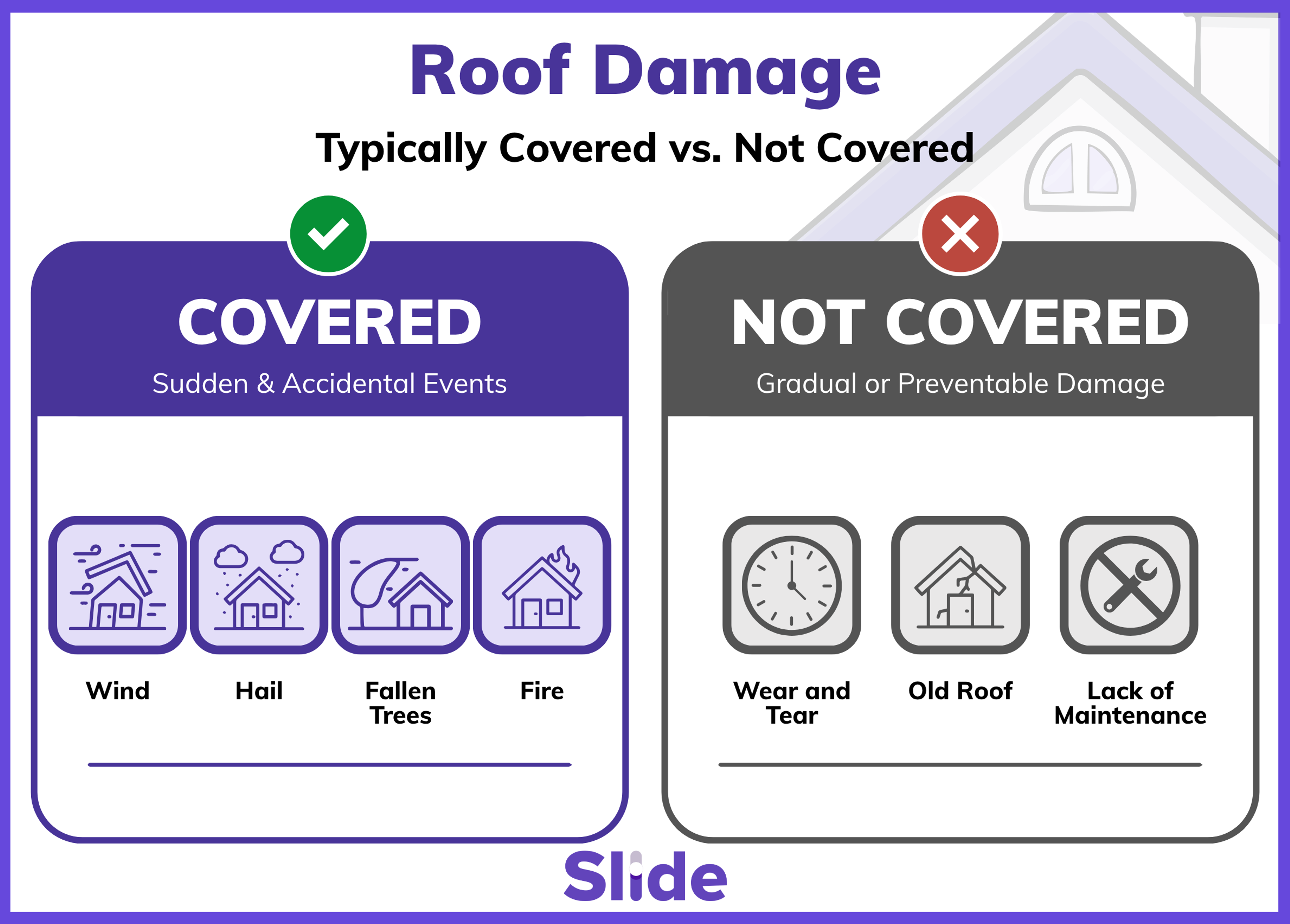
While most standard homeowners insurance policies cover roof damage from events like hurricanes, fallen trees, or fire, they typically exclude damage caused by older roofs, gradual wear, deterioration, or lack of maintenance. Your policy terms will ultimately determine how much of the repair or replacement costs are covered by your insurer.
Read on for insights that will help you understand what is covered in your policy, as well as how to document and file a claim should you have roof damage.
Types of Roof Damage Covered by Home Insurance
Your dwelling coverage protects your roof as part of your home's structure, but insurance coverage will vary based on the specific cause of the damage.
Insurance companies generally cover roof damage from these common perils:
- Storm Damage: Wind and hail directly damaging your roof typically qualify for coverage. These are among the most common roof insurance claims in Florida and nationwide.
- Fire and Smoke: Damage to your roof from fires, including those caused by lightning strikes, is generally covered under standard comprehensive policies.
- Falling Objects: Trees, branches, satellites, or debris that fall onto your roof during storms or accidents can qualify for coverage. The claim typically will cover removing the fallen tree from your roof and repairing the damage.
Your policy documents list all covered perils that apply to damage to your roof. Most policies exclude coverage for avoidable damage like neglect or normal deterioration over time, making regular roof inspection essential.
Storm Damage Coverage
Wind damage to roof structures ranks among Florida's most frequent insurance claims. Most standard policies cover wind-related damage, including torn or displaced shingles, tiles, or metal roof material, lifted sections, and punctures from wind-driven debris.
After storms, your insurance company may send an adjuster or expert to inspect your roof for damage. Professional documentation of the extent of damage helps confirm the cause and determine whether repair or replacement makes more sense. Thorough records, especially imagery taken safely and from multiple angles, is crucial during this process.
Florida policies typically include a separate hurricane deductible—the standard amount is 2% of your dwelling coverage amount, with optional higher deductibles available. For a $300,000 home with a 2% hurricane deductible, you'd pay $6,000 out-of-pocket before insurance kicks in, compared to your standard fixed-dollar deductible for non-hurricane claims. Typically, the hurricane deductible applies cumulatively to all hurricane losses in a calendar year.
Florida law (Statute 627.4025) defines when this hurricane deductible applies: from the moment the National Hurricane Center issues a hurricane warning for any part of Florida until 72 hours after the termination of the last hurricane watch or warning.
Some insurance companies may handle roof damage claims differently based on the geographical location within Florida. A careful review of your policy's declarations page should reveal these potential limitations.
Coverage for Falling Objects
When objects fall onto your roof, homeowners insurance may cover the removal of the object and repair of any resulting damage. Coverage applies whether the falling item comes from your property or a neighbor's.
For example, if a falling tree damages your roof during a storm, your policy typically covers:
- Removing the tree from your roof
- Repairing related damage to your roof
- Addressing any additional damage to your home's interior
Most policies require timely reporting of damage to cover the roof effectively. Document the damage immediately with photos and videos, then contact your insurance company. If your coverage is with Slide, our claims team will go a step further and help you coordinate tree removal and tarping. We offer support from contractors vetted for exceptional quality assurance and customer service.
Did You Know? If your neighbor's healthy tree falls and damages your roof during a storm, your insurance typically covers the damage, not your neighbor's. However, if the tree was visibly dead or diseased and your neighbor neglected to remove it with knowledge of its condition, their liability insurance might cover your deductible and claim costs.
Does Home Insurance Cover Roof Leaks?
Homeowners insurance covers roof leaks only when they result from a covered peril, such as storm damage or falling objects. The key factor isn't the leak itself, but what caused it.
For example, if wind damages your shingles and rain subsequently enters through the damaged area, does homeowners' insurance cover roof leaks? Typically, yes—including resulting water damage to your ceiling, walls, and belongings.
However, your insurance won't cover the repairs if your roof leaks due to age-related deterioration or poor maintenance.
This distinction creates significant differences in coverage outcomes:
- Typically Covered: Leaks from a storm created opening, impact from falling objects, or other covered perils
- Typically Not Covered: Leaks resulting from wear and tear, lack of maintenance, or gradual deterioration
Always review your specific policy language, as coverage details vary between insurance companies and policy types.
Water Damage from Roof Leaks
When a covered roof leak causes secondary water damage to your home's interior, your home insurance may cover those repairs as well. Coverage may include damage to ceilings, walls, flooring, and personal property.
Prompt action after discovering a leak significantly affects your insurance claim outcome. Insurance companies expect homeowners to take reasonable steps to prevent additional damage, such as:
- Using buckets to collect dripping water
- Moving valuable items away from leaking areas
- Hiring a professional to cover damaged roof sections with tarps.
Document all water damage with photos and videos before beginning cleanup. Keep detailed records of all emergency repair expenses, as these may qualify for reimbursement under your policy.
Did You Know? If Slide is your carrier, our claims team will help coordinate roof tarping from a contractor who has been vetted for exceptional quality assurance and customer service. We believe in protecting our policyholders every step of the way and go a step beyond to make it easy to protect your home and get back to whole quickly!
When Home Insurance Won't Cover Your Roof
Coverage limitations can create surprises when filing claims unless you know what to expect. Most homeowners' policies exclude roof damage resulting from:
- Normal Wear and Tear: Gradual deterioration from age and weather exposure represents the most common exclusion. Insurers expect regular home improvement and maintenance for aging roofs.
- Lack of Maintenance: Damage that could have been prevented through routine maintenance is typically denied. This would include neglected repairs, clogged gutters that cause water backup, or ignored visible deterioration.
- Cosmetic Damage: Many policies exclude coverage for damage that affects only your roof's appearance but not its function. Color variations after roofing repairs often fall under this exclusion.
- Material Defects: Problems resulting from manufacturing flaws or improper installation may be covered under manufacturer warranties rather than insurance coverage.
Some policies also contain specific roof endorsements or exclusions based on roof age, material type, or regional risks. A careful review of these details when purchasing or renewing your policy prevents unexpected claims outcomes.
💡 Pro Tip: After major storms, beware of "storm chasers"—traveling contractors who solicit roof repair work door-to-door. Protect yourself from fraud by never paying in full up front, avoiding contractors who "waive" deductibles (which is illegal in Florida), and refusing high-pressure tactics. Always verify licenses through the Florida Department of Business and Professional Regulation, check references, and consult your insurance agent before signing anything. If you have coverage with Slide, your claims representative can assist in finding a vetted contractor.
Will Home Insurance Pay for a New Roof?
Whether home insurance covers roof replacement depends on several key factors, with Florida's specific roofing laws adding another layer of complexity:
Florida's Building Code Requirements: Florida's roofing regulations have changed significantly in recent years. Previously, the "25% Rule" required complete roof replacement if more than 25% was damaged. Under Senate Bill 4-D, only the damaged portions need repair if the rest of the roof complies with Florida's 2007 Building Code or later versions.
Age and Construction Date: Partial repairs may be permissible for homes with roofs built or replaced after March 1, 2009. However, roofs constructed before this date might still fall under the original 25% replacement requirement when damaged.
Cause of Damage: Replacement coverage only applies when damage results from a covered peril, like storms or fire, not from age or maintenance issues. Florida's frequent hurricane activity makes understanding your wind damage coverage especially important.
Policy Type: Your specific policy provisions determine replacement eligibility. Some Florida insurers have introduced special roof endorsements or limitations in response to the state's unique weather challenges.
Does home insurance cover roof replacement in full? It can, but there's no guarantee as coverage varies based on your specific situation, policy provisions, and the applicable Florida building codes.
Replacement Cost vs. Actual Cash Value
How your policy values your roof dramatically affects your claim payout. Most homeowner policies use one of two valuation methods for repair or replacement:
Replacement Cost Value (RCV) – This pays the reasonable cost of replacing your roof with similar-quality materials without deducting depreciation. A policy with RCV will often cost more, but provides the most comprehensive coverage for new roof costs.
Actual Cash Value (ACV) – This pays the depreciated value of your roof at the time of damage, accounting for its age and condition. A policy with ACV will typically be less expensive, but may result in a lower payout that does not cover the full cost of a new roof.
For example, if your 10-year-old roof with a 20-year expected lifespan faces replacement:
- RCV policy might pay $15,000 (full replacement cost)
- ACV policy might pay only $7,500 (accounting for 50% depreciation)
The valuation method can have a significant financial impact. Check your policy declarations page to determine which method will be used if your roof is damaged.
How To File a Roof Damage Insurance Claim
When your roof suffers damage, follow these steps to navigate the insurance claim process effectively:
- Document Thoroughly: Take dated photos and videos of all visible damage from safe vantage points, as well as interior damage.
- Contact Your Insurer: Report the damage promptly, following your policy's notification requirements. Ask about specific documentation needed and next steps.
- Meet with the Adjuster: Prepare for the insurance adjuster's inspection by gathering maintenance records and previous inspection reports. Consider having your roofing repairs contractor present during this assessment.
- Review the Settlement Offer: Carefully evaluate your insurer's decision, comparing it with your contractor's assessment and policy provisions.
Throughout the process, maintain detailed records of all communications with your insurance company, including names, dates, and conversation summaries.
💡 Pro Tip: It is your responsibility to take reasonable measures to prevent further damage. After documenting the damage with dated images, hire a professional to cover any holes with tarps and any other measures to prevent further damage. Keep all receipts for emergency repair expenses.
Slide Insurance: Your Roof Coverage Partner
At Slide Insurance, we offer tailored coverage for Florida homeowners—and our flexible plans extend even to your roof coverage. From choosing your customized protection to filing a claim should your property sustain damage from a covered peril, we’ll be here when you need us.
There are multiple ways to secure coverage that work for your needs. Purchase directly online or consult with one of our local agents, who understand regional roofing challenges and coverage considerations specific to your area.
Protect Your Roof, Protect Your Home
Selecting the right coverage and understanding how it will work in the event of a covered loss is essential for Florida homeowners and their financial well-being. Your roof shields everything beneath it from Florida's harsh elements, making appropriate coverage crucial.
Navigating insurance for vital roof components seems complex, but it generally comes down to this: sudden and accidental damage is typically covered, while age-related deterioration is not. Regular roof inspection, maintenance documentation, and policy term knowledge are your best defense against unexpected claims outcomes.
Ready to ensure your roof has the protection it deserves? Get your free quote from Slide Insurance today to evaluate your coverage and explore options tailored to your needs. Our team specializes in helping Florida homeowners secure the right roof protection without unnecessary coverage or costs.