
Hip vs Gable Roof: How Roof Shape Affects Home Insurance
Your roof does more than protect you from the elements—it directly influences your home insurance coverage and rates. When exploring roofing options, the gable vs hip roof decision affects everything from wind resistance to premium costs, especially in Florida's hurricane-prone climate, and other coastal areas that experience strong windstorms.
Understanding how your roof affects your home insurance helps you make informed decisions that protect both your home and your wallet, ensuring you have the right amount of homeowners insurance for your specific situation.
Hip Roof vs Gable Roof: What's the Difference?
Your roof's shape determines how wind flows around your home during a wind event like a tropical storm, hurricane, or tornado —and insurance companies pay close attention to this performance difference.
What Is a Gable Roof?
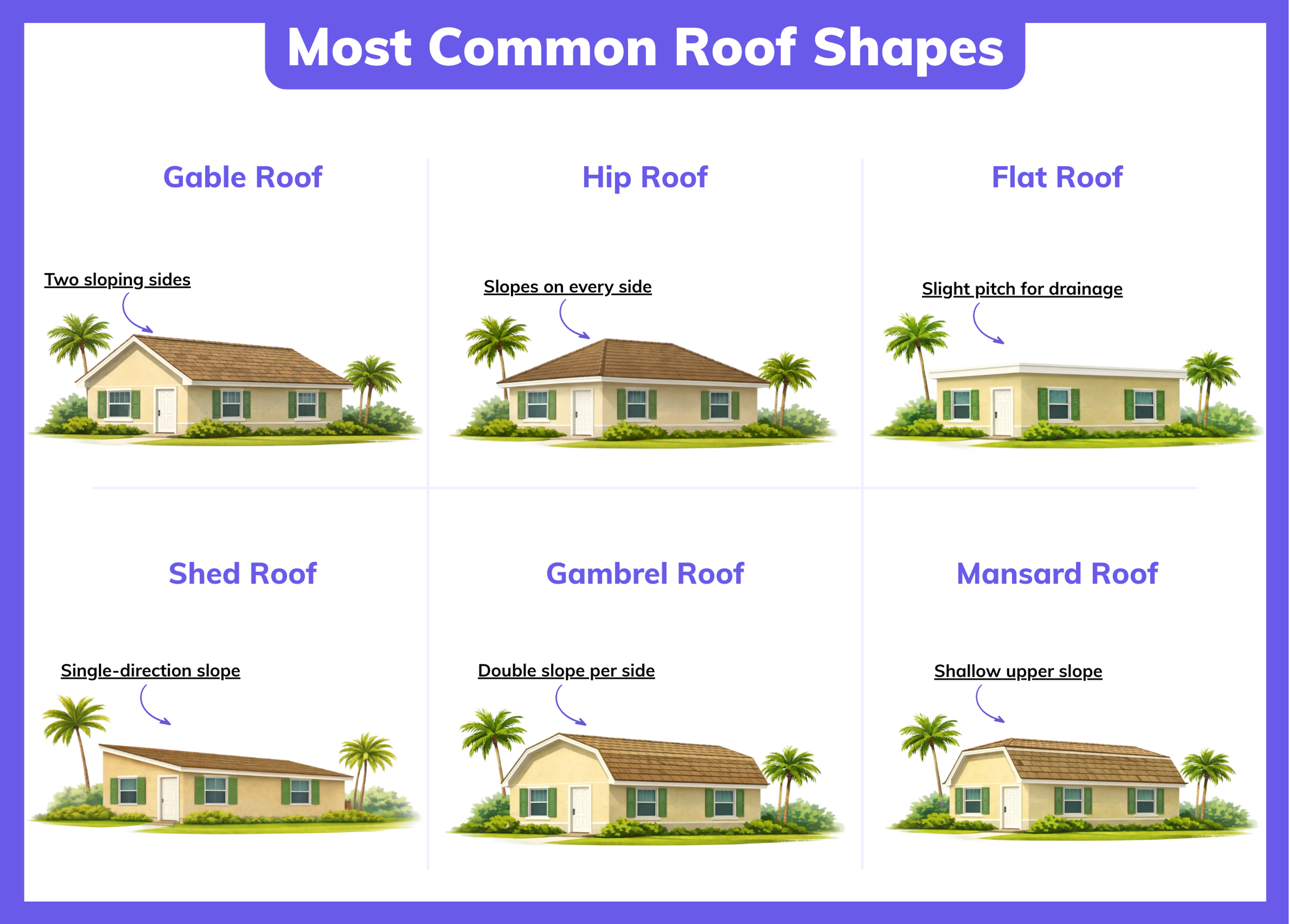
Gable roofs feature two sloping sides that meet at a ridge, creating triangular walls (called gables) on the remaining two sides. Picture the classic house shape children draw—that's a gable roof.
What Is a Hip Roof?
Hip roofs slope downward on all four sides, eliminating the flat gable walls entirely. All walls sit beneath the roof's eaves, creating a more aerodynamic profile that performs better in high winds.
Understanding Gable Roofs
Gable roofs dominate American residential architecture because of their simplicity and cost-effectiveness. The triangular shape channels water efficiently while providing substantial attic space.
Common gable roof types include:
Open Gable Roofs: The most basic design with two evenly sloped sides meeting at a central ridge.
Box Gable Roofs: The triangular gable ends are enclosed, which can reduce the chance of wind getting underneath exposed edges.
Cross Gable Roofs: Create L-shaped floor plans, but increase complexity and potential weak points.
Gambrel Roofs: Feature a double slope on each side, commonly seen on barn-style homes.
Understanding Hip Roofs
Hip roofs excel in areas prone to severe weather because their four-sided design distributes wind loads more evenly. Insurance companies recognize this superior wind resistance, especially for Florida homeowners during hurricane season.
Common hip roof variations include:
Simple Hip Roofs: Four triangular faces meeting at a single peak, providing excellent wind resistance.
Hip and Valley Roofs: Multiple hip sections combined for complex floor plans and architectural appeal.
Mansard Roofs: Two slopes on each side—steep lower sections with gentler upper portions.
Combination Hip Roofs: Feature flared sections at the bottom perimeter for distinctive styling.
Which Roof Is Better for High Winds?
Hip roofs outperform gable roofs in high-wind situations because their four-sided design eliminates the large flat surfaces that create uplift during storms. Wind flows evenly over the sloped surfaces, reducing pressure differentials that can damage roofing systems.
Gable roofs face particular challenges at the gable ends, where wind can create substantial uplift forces. Hurricane-force winds hitting a gable end can literally peel the roof off a home.
Do Insurance Companies Prefer Hip or Gable Roofs?
Insurance companies strongly favor hip roofs over gable designs, particularly in coastal and hurricane-prone regions. The superior wind resistance translates directly into fewer claims for insurers.
Gable Roof Insurance Considerations
When evaluating gable roofs, insurance companies weigh several key factors:
Homeowner Advantages:
- Cost-effective construction means lower replacement costs if roof damage occurs.
- Simplified damage assessment speeds up claims processing.
- Excellent drainage prevents water accumulation that leads to structural damage.
- Substantial attic space for storage reduces pressure on living areas.
Things to Consider:
- Wind vulnerability at gable ends increases storm damage risk. Wind mitigation measures like hurricane straps or clips reinforce the weak points of your roof. Insurance companies may require higher deductibles or additional wind mitigation measures.
- Regular maintenance becomes more critical with older installations and you may potentially face coverage restrictions or inspections to validate the condition of the roof.
Hip Roof Insurance Benefits
Hip roofs are typically more favorable to insurance carriers due to their proven storm performance.
Homeowner Advantages:
- Superior wind resistance earns premium discounts from most Florida carriers.
- Reduced uplift risk means fewer complete roof failures during storms.
- Even load distribution prevents localized stress concentrations.
- Better drainage from all four sides reduces water damage claims.
- Often qualify for wind mitigation credits.
Things to Consider:
- Higher replacement costs due to complex construction can increase dwelling coverage requirements.
- Complex repairs may require specialized contractors and longer completion times.
- More expensive initial installation compared to gable alternatives.
- Regular maintenance is critical and you may potentially face coverage restrictions or inspections to validate the condition of the roof.
Florida Roof Requirements for Homeowners Insurance
Florida's unique climate creates specific roof requirements for homeowners' insurance that vary by region and carrier. Most Florida insurers require roofs to meet current wind resistance standards, regardless of construction date or roof shape.
Key requirements typically include:
- Roofs must comply with current Florida Building Code standards.
- Hurricane strapping and wind-resistant materials for new construction.
- Impact-resistant shingles in high-risk coastal areas.
- Proper drainage systems to prevent water damage.
- Regular maintenance documentation for older installations.
Homes with roofs older than 10-15 years may require professional inspections before coverage approval.
How Does Roof Age Affect Insurance Coverage?
Roof age plays an important role in insurance underwriting, often outweighing roof type in coverage decisions.
Regular maintenance documentation helps older roofs qualify for better coverage. Professional inspections, repair records, and upgrade certificates demonstrate responsible ownership that insurance companies value.
Cost Differences: Hip vs Gable Roof Insurance
Insurance premiums reflect the risk differences between roof types.
Premium differences typically include:
- Hip roofs usually qualify for wind mitigation discounts that can reduce insurance costs.
- Florida law requires insurance companies to offer discounts for wind-resistant features like hip roof construction.
- Gable roofs generally don't qualify for the same level of wind mitigation credits as hip roofs.
- Wind mitigation inspections can reveal savings opportunities for hurricane-resistant roof features.
- Flat roofs often carry the highest premiums due to increased risk factors.
What About Flat Roofs?
Flat roofs present unique challenges for both homeowners and insurance companies. Poor drainage becomes especially problematic during Florida's heavy rain seasons, potentially leading to issues that standard homeowners' insurance may not cover.
Flat roof insurance challenges include:
- Limited drainage capabilities during heavy storms.
- Membrane deterioration from Florida's intense UV exposure.
- Higher risk of pooling water and structural damage.
Newer installations with proper drainage systems and good roofing materials can obtain standard coverage at competitive rates, but older flat roofs often face coverage restrictions.
Professional Installation Requirements
Insurance companies increasingly require professional installation documentation for all roof types. DIY repairs or unpermitted modifications can void coverage entirely, leaving homeowners financially exposed.
Licensed contractor installation ensures compliance with building codes and manufacturer specifications.
Regular maintenance by qualified professionals helps maintain insurance coverage and prevents minor issues from becoming major claims.
Making the Right Choice for Your Florida Home
Choosing between gable and hip roofs involves balancing construction costs, aesthetic preferences, and insurance implications. Hip roofs offer superior storm protection and insurance benefits, but cost more initially. The long-term savings from reduced insurance premiums often offset higher construction costs.
Gable roofs provide cost-effective solutions when properly constructed with wind resistance features. Consider your specific location, local weather patterns, and long-term plans when choosing roof styles.
Protect Your Florida Home With Slide Insurance
Understanding how roof shape affects your home insurance helps you make informed decisions about both construction and coverage. Slide Insurance provides flexible coverage options that accommodate various roof types while maintaining competitive rates for Florida homeowners.
Get your personalized Florida home insurance quote today and discover how Slide Insurance protects your investment with coverage designed around your roof and your lifestyle. Your home deserves protection as solid as the roof over your head.